The rise of visual thinking: How AI and whiteboarding will shape the 2026 workplace
Published on Dec 2, 2025
The rise of visual thinking: How AI and whiteboarding will shape the 2026 workplace
At the end of 2022, generative AI was on everyone's lips. We were promised a revolution in both our professional lives and our daily routines. Three years later, has this revolution really taken place?
As we approach 2026, one thing is clear: it is mainly organizations and teams that dare to test, adjust, and innovate with AI that are getting the most out of it. For many, AI remains a field of exploration, with each company seeking the winning formula tailored to its needs and sector.
What is no longer in doubt is its impact on efficiency and productivity. AI is gradually being integrated into teams and paving the way for enhanced human collaboration.
Could we take it even further by combining this power with the universal visual language?
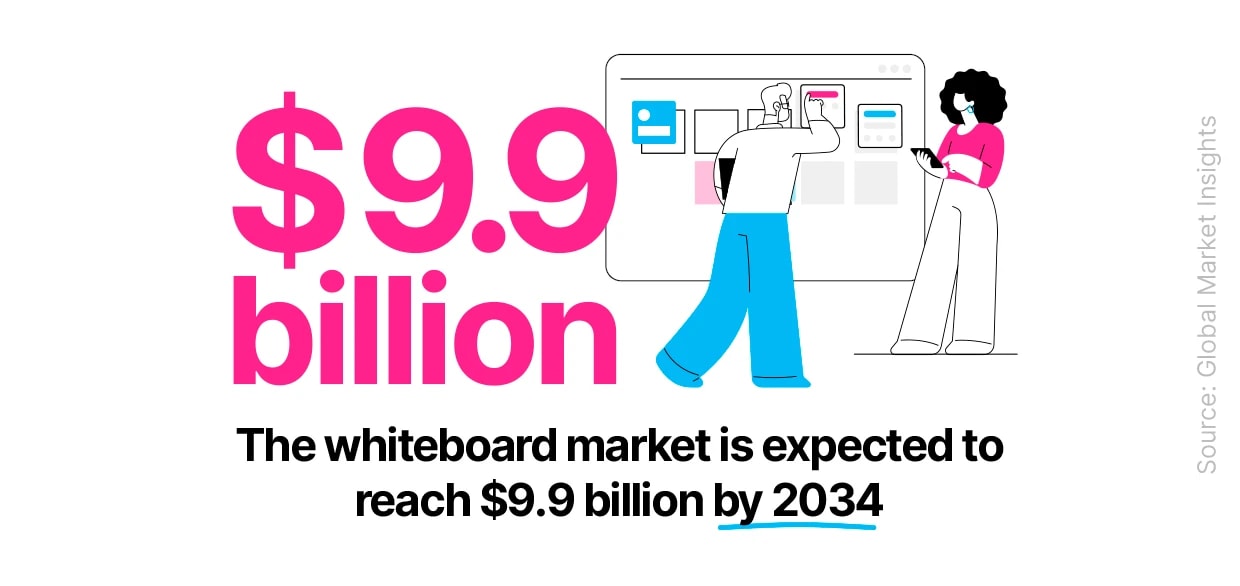
The visual channel is already central to our communication. It facilitates understanding, stimulates creativity, and fosters team unity more effectively than any other channel. For example, the global market for interactive whiteboards, which have become essential tools for visual collaboration in businesses, was worth $3.7 billion in 2024 and is expected to reach $9.9 billion by 2034.
Add AI to this collaborative workspace, and you get immense potential to structure your projects and workflows, quickly create new and more efficient ways of working, streamline your communication, and save precious time and money. This is also a new way to rediscover the joy of collaborating with ten times more fluidity on a daily basis.
In this guide, find out how the combination of AI and visual whiteboards can transform your teamwork and give you a head start on 2026 right now!
At the end of 2025, digital collaboration has become a pillar of collective performance. Driven by the rise of hybrid work and the need for agility in a demanding economic environment, companies are now accelerating the adoption of collaborative tools. The global market for these solutions is expected to reach $42 billion by 2030.
At the same time, teams' expectations are also changing profoundly. Employees aspire to workspaces that are more structured, engaging, and capable of adapting to all forms of interaction, whether spontaneous or asynchronous, beyond geographical and linguistic barriers.
Two major trends are emerging in this context, and they have the potential to permanently transform the way we work:
In 2025, generative AI continues its spectacular rise within organizations. According to McKinsey, the percentage of companies using it has increased from 33% in 2023 to 79% today.
In almost every sector, teams now see the opportunity to free up time for higher value-added tasks by delegating some of their repetitive or time-consuming tasks to AI:
However, although the enthusiasm is real, the use of AI is often still in the experimental stage, even in 2025. According to McKinsey, only 7% of companies have taken the step of deploying AI on a large scale. In addition, according to a new study by Wrike, 42% of teams have already used AI tools that are not officially deployed or approved by their company, which tends to reinforce silos and make workflows less efficient.
It is also important to remember that generative AI is not intended to replace human collaboration, but to increase its potential. It frees up time, while leaving teams responsible for decisions, creativity, adaptability, and social connection.
Although more and more brands are using it in their communications and content, human intervention is still necessary to maintain authenticity and prevent online content from looking identical.
Therefore, you must integrate AI into your work practices with discernment, supporting and complementing the value produced by your teams' work.
Digital whiteboards have become the ultimate collaborative tools, harnessing the full power of visual collaboration in the workplace. They provide teams with a true shared workspace, accessible anywhere and at any time, where ideas are centralized and brought to life.
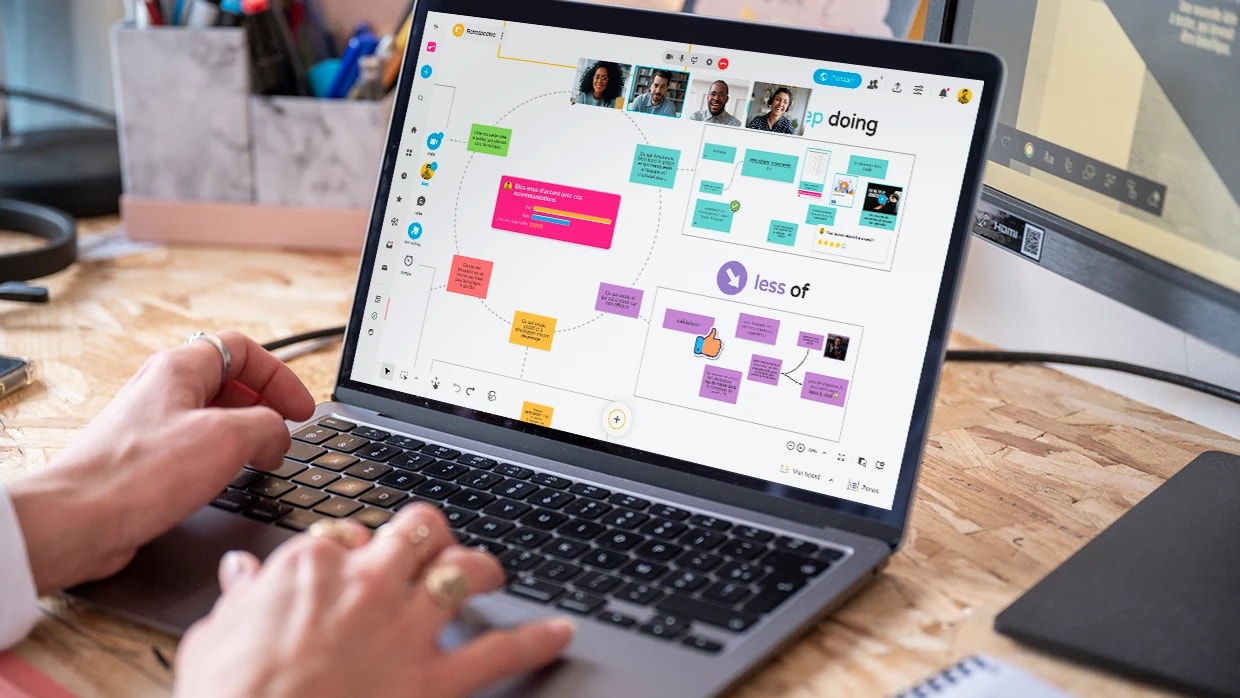
Whiteboards enable smooth, centralized collaboration: all exchanges are visible in one place and in real time.
Whiteboards allow you to highlight each contribution and structure collective thinking by including a variety of visual formats, color codes, and intuitive connectors. They boost participation and engagement, especially with built-in videoconferencing features that connect teams, even when they are working remotely.
For more than ten years, Klaxoon has been capitalizing on the feedback from thousands of users of Board, our digital whiteboard, in a wide variety of industries. Here is how Sylvaine Houdy, Department Manager at the City of Lyon, sums up the benefits of Board:
A single space and a single tool: we can present the project, submit our ideas, vote, build and follow the project, and import a report of the project directly on our Board.
When generative AI emerged in 2022, we immediately saw the potential of combining this technology with Klaxoon Board. Integrating artificial intelligence with a proven collaborative tool opens up new possibilities for professional use cases:
For us, this is the next logical step in transforming collaborative practices. With AI, the impact of whiteboards is increased tenfold: collaboration becomes even simpler, more fluid, and more accessible, regardless of the use or context.
After spending several years developing, testing, and deploying AI-based features in Board, we are now offering our expertise to organizations that are ready to take the leap into 2026 and maximize their teams' efficiency and performance.
Preparation is often the weak link in meetings: more than 25% of employees consider a lack of preparation to be the main cause of inefficiency in meetings. Integrating AI into whiteboards removes this obstacle and makes each session more productive.
For example, in Klaxoon, thanks to our AI assistant now available on Board, all it takes is a simple prompt to instantly generate a whiteboard structure tailored to the purpose of your meeting:
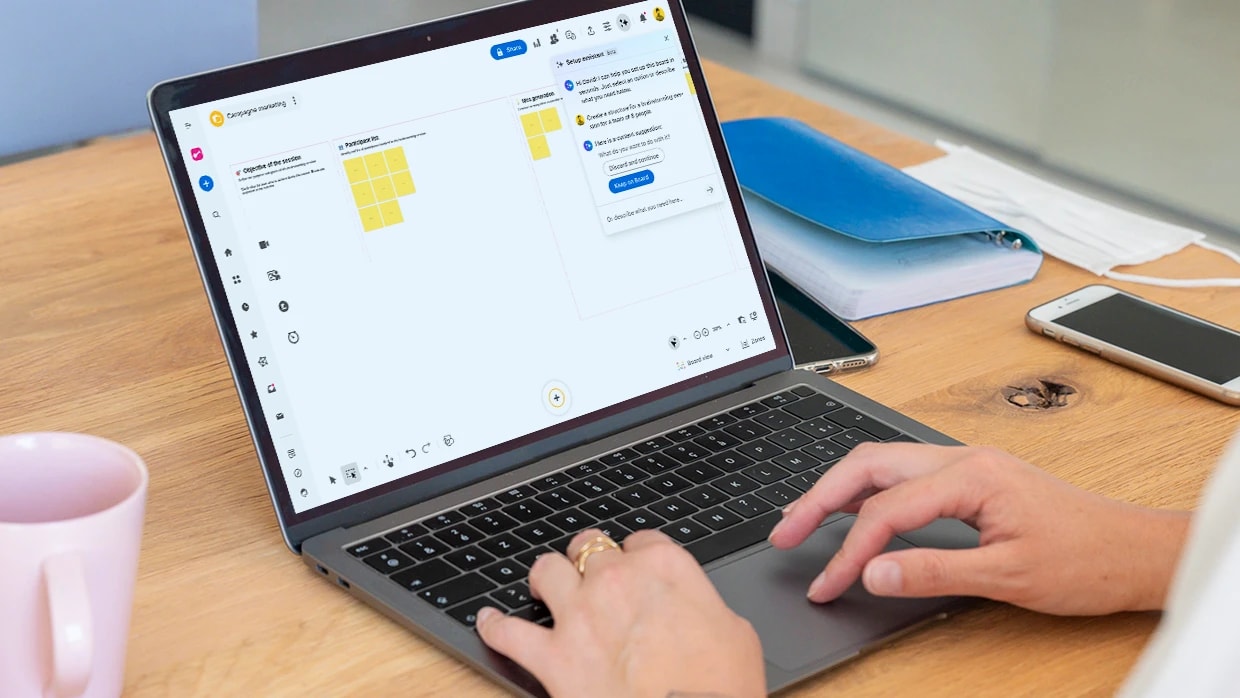
By entering your request in the discussion thread, the AI assistant generates a ready-to-use activity structure in your Board. All you have to do is fill it in as you wish!
Here, AI generates organized sections and ideas, simplifying meeting preparation, reducing organizers' workload, and providing the team with a ready-to-use framework.
This approach saves valuable time and gets you straight to the heart of the discussion. Teams can focus on content and collaboration rather than formatting, resulting in more dynamic and effective meetings.
More and more companies are adopting whiteboards to energize their brainstorming sessions. Their visual and interactive format is appealing because it creates an environment conducive to the expression of ideas and increased participation, even on a large scale.
Once more, AI and whiteboards prove to be a highly effective combination in this case. Whether using external tools or features directly integrated into your collaboration tool, there are several ways to use AI to make brainstorming more effective:
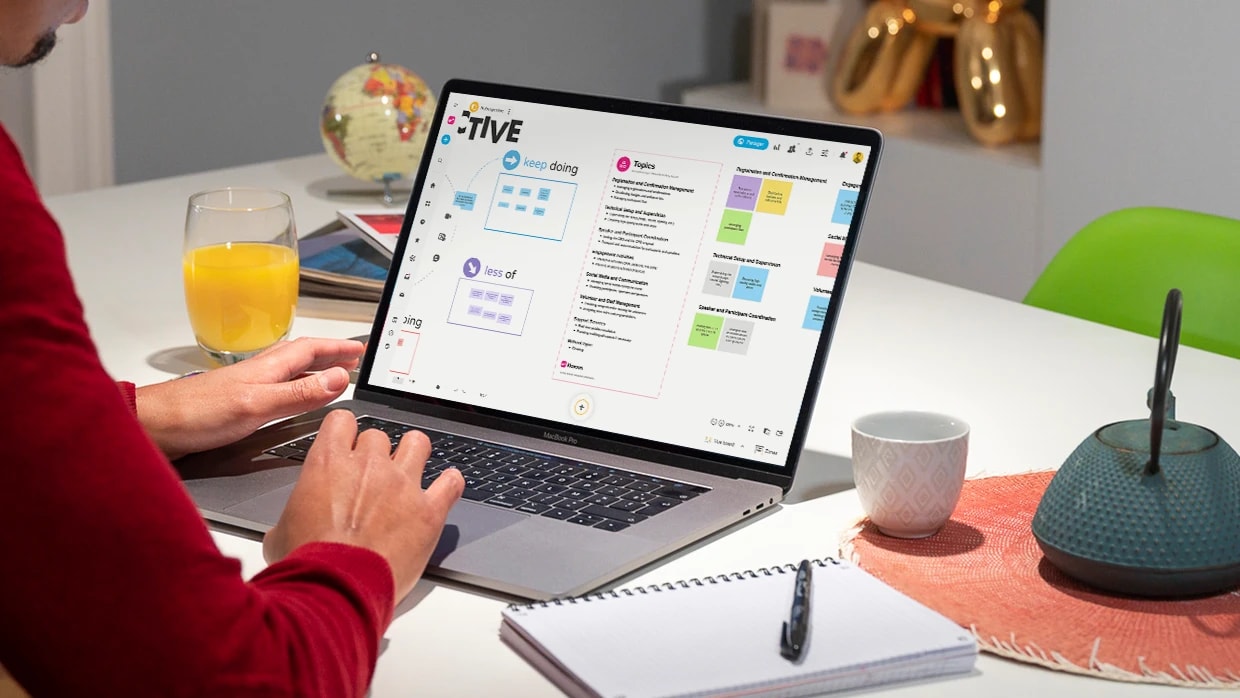
Whether in the form of ideas or text, all your contributions are organized on your Board using AI to facilitate the transition to the next step.
Thanks to these capabilities, teams can overcome frequent brainstorming obstacles, such as a lack of inspiration or managing numerous contributions, even when dozens or hundreds of participants collaborate in the same space.
For a project to be successful, many factors must be considered in the early stages. The ability to define clear objectives, assign roles and responsibilities, and create the first tasks depends on the quality of the initial stakeholder exchanges at the project kickoff and how the team moves from idea to action.
This is where the combination of whiteboard and AI makes all the difference! From the outset, a whiteboard allows you to centralize the expectations and ideas of stakeholders, while AI automatically summarizes them visually, for example in the shape of a word cloud.
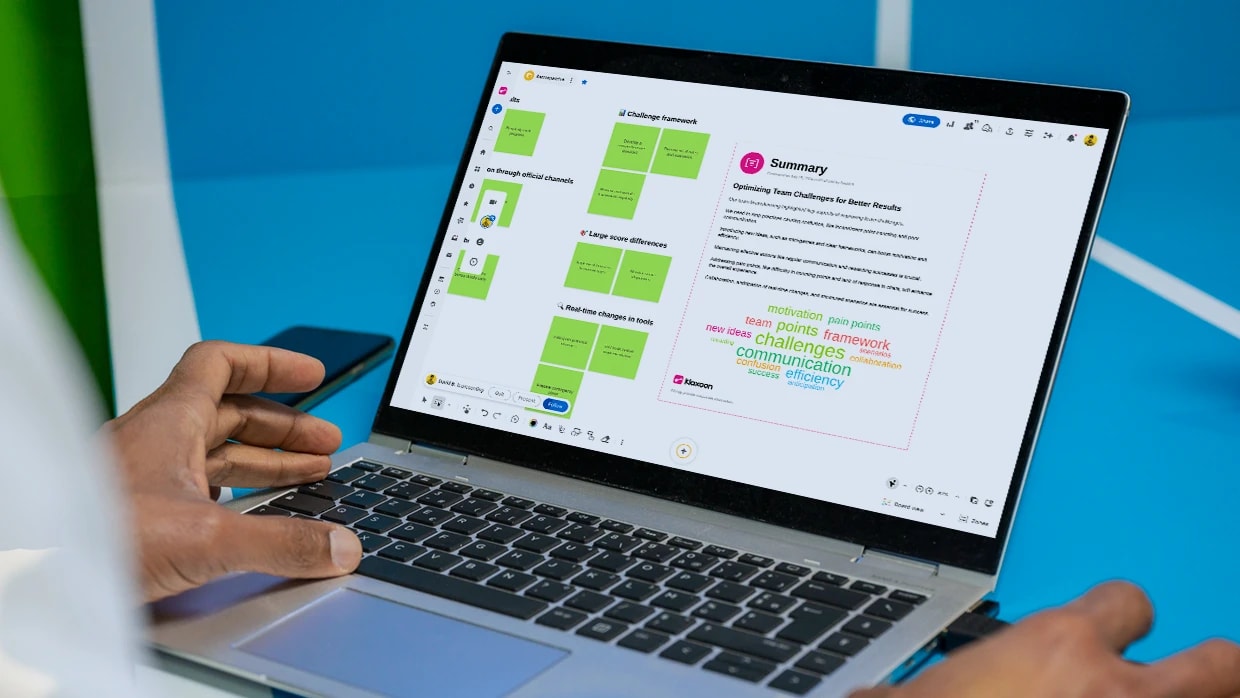
Visually, key ideas immediately stand out in the generated word cloud, helping you to focus your thinking.
Based on these exchanges, an action plan can be generated directly on the whiteboard. If it is integrated with a project management solution, such as Klaxoon and Wrike, actions can be transformed into follow-up tasks with a single click, thus speeding up execution.
Furthermore, with Wrike's AI agents, you can now automate the creation of project-specific workflows and assign responsibilities to team members for more efficient management.
In increasingly dispersed and diverse teams, communication can quickly become a challenge. Integrating AI into whiteboards also helps break down these barriers by spontaneously translating the content of ideas in your workspace as they are shared.
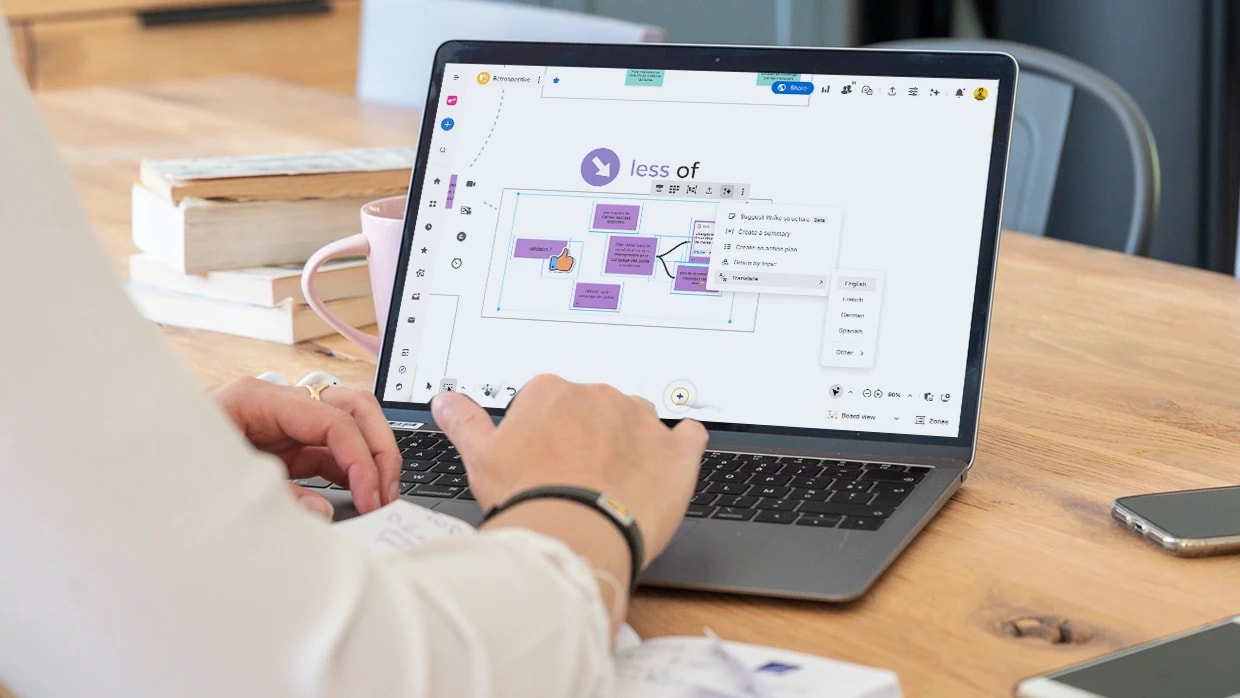
Over a hundred languages are available to take advantage of the translation features in Board, for maximum efficiency in your exchanges.
Each participant can express themselves in their own language, while instantly understanding the contributions of other members without losing track of the discussion. This adaptation reduces friction and promotes inclusion, allowing everyone to contribute fully regardless of their background or culture.
So where do you start when it comes to applying these practices in your own organization to get 2026 off to a good start?
Successfully integrating AI into your collaborative practices requires a structured and gradual approach. Here are some actions you can take right now:
AI and collaborative tools will only reach their full potential in terms of performance and engagement if you harness collective intelligence and foster a culture of trust within your team.
The integration of AI into visual whiteboards is already a reality that is transforming the way companies organize, communicate, and innovate on a daily basis. The examples in this guide demonstrate that these benefits are available to any organization willing to experiment and engage its teams in this evolution, poised to become a cornerstone of tomorrow's collaboration.
As for today, the competitive advantage of getting started now is very real, with an impact that is reflected in both performance and quality of life at work for all employees. Organizations that know how to adapt their practices, secure their uses, and stimulate collective intelligence will be best prepared to take full advantage of the advances that will shape collaboration in 2026.
Why not yours?
Want to get 2026 off to a good start by boosting your efficiency with whiteboards and AI?
Unlock your teamwork potential
For free, make your first steps to top-tier work efficiency with the Klaxoon Visual Platform.